It's long, but it's a good one. Link HERE
And another one HERE
Friday, August 13, 2010


Thursday, April 22, 2010
Collateral Murder: The Wikileaks Agenda

What Wikileaks did not make clear in their initial release was the editorial license they took with the raw video footage to achieve 'maximum political impact'. Watch this video of an interview that Colbert did with one of the Wikileaks founders, Julian Assange:
Now watch this video created by The Scholar's Stage (link here) showing portions of the uncut video that Wikileaks conveniently 'left out':
"Wikileaks edited and presented this incident in a manner that can be called nothing but blatantly dishonest. This video presents portions of the full 40 minute video that Wikileaks left out. At this moment it has received 500 hits. The Wikileaks video has received 5 million.And finally, (sorry for such a long post!) here is an interview with a US soldier who was among the first to arrive on the scene following the incident depicted in the video (for full transcript and video go to wired.com)
I ask my readers to spread this video to the best of their ability. While I do not condone the reckless actions of these aviators, their side of the story needs to be told. The record needs to be set straight." - The Scholars Stage
Ethan McCord had just returned from dropping his children at school earlier this month, when he turned on the TV news to see grainy black-and-white video footage of a soldier running from a bombed-out van with a child in his arms. It was a scene that had played repeatedly in his mind the last three years, and he knew exactly who the soldier was.
In July 2007, McCord, a 33-year-old Army specialist, was engaged in a firefight with insurgents in an Iraqi suburb when his platoon, part of Bravo Company, 2-16 Infantry, got orders to investigate a nearby street. When they arrived, they found a scene of fresh carnage – the scattered remains of a group of men, believed to be armed, who had just been gunned down by Apache attack helicopters. They also found 10-year-old Sajad Mutashar and his five-year-old sister Doaha covered in blood in a van. Their 43-year-old father, Saleh, had been driving them to a class when he spotted one of the wounded men moving in the street and drove over to help him, only to become a victim of the Apache guns.
McCord was captured in a video shot from one helicopter as he ran frantically to a military vehicle with Sajad in his arms seeking medical care. That classified video created its own firestorm when the whistleblower site Wikileaks posted it April 5 on a website titled “Collateral Murder” and asserted that the attack was unprovoked. More than a dozen people were killed in three attacks captured in the video, including two Reuters journalists, one carrying a camera that was apparently mistaken for a weapon.
McCord, who served seven years in the military before leaving in the summer of 2009 due to injuries, recently posted an apologetic letter online with fellow soldier Josh Steiber supporting the release of the video and asking the family’s forgiveness. McCord is the father of three children.
Wired’s Kim Zetter reached McCord at his home in Kansas. This is his account of what he saw.
Wired.com: At the time you arrived on the scene, you didn’t know what had happened, is that right?
Ethan McCord: Right. We were engaged in our own conflict roughly about three or four blocks away. We heard the gunships open up. [Then] we were just told … to move to this [other] location. It was pretty much a shock when we got there to see what had happened, the carnage and everything else.
Wired.com: But you had been in combat before. It shouldn’t have surprised you what you saw.
McCord: I have never seen anybody being shot by a 30-millimeter round before. It didn’t seem real, in the sense that it didn’t look like human beings. They were destroyed.
Wired.com: Was anyone moving when you got there other than the two children?
McCord: There were approximately two to three other people who were moving who were still somewhat alive, and the medics were attending to them.
Wired.com: The first thing you saw was the little girl in the van. She had a stomach wound?
McCord: She had a stomach wound and she had glass in her eyes and in her hair. She was crying. In fact, that’s one of the reasons I went to the van immediately, because I could hear her crying. It wasn’t like a cry of pain really. It was more of a child who was frightened out of her mind. And the next thing I saw was the boy…. He was kind of sitting on the floorboard of the van, but with his head laying on the bench seat in the front. And then the father, who I’m assuming was the father, in the driver’s seat slumped over on his side. Just from looking into the van, and the amount of blood that was on the boy and the father, I immediately figured they were dead.
So, the first thing I did was grab the girl. I grabbed the medic and we went into the back. There’s houses behind where the van was. We took her in there and we’re checking to see if there were any other wounds. You can hear the medic saying on the video, “There’s nothing I can do here, she needs to be evac’d.” He runs the girl to the Bradley. I went back outside to the van, and that’s when the boy took, like, a labored, breath. That’s when I started screaming, “The boy’s alive! The boy’s alive!” And I picked him up and started running with him over to the Bradley. He opened his eyes when I was carrying him. I just kept telling him, “Don’t die; don’t die.” He looked at me, then his eyes rolled back into this head.
Then I got yelled at by my platoon leader that I needed to stop trying to save these mf’n kids and go pull security…. I was told to go pull security on a rooftop. When we were on that roof, we were still taking fire. There were some people taking pot shots, sniper shots, at us on the rooftop. We were probably there on the roof for another four to five hours.
Wired.com: How much sniper fire were you getting?
McCord: It was random sporadic spurts. I did see a guy … moving from a rooftop from one position to another with an AK-47, who was firing at us. He was shot and killed.
After the incident, we went back to the FOB [forward operating base] and that’s when I was in my room. I had blood all down the front of me from the children. I was trying to wash it off in my room. I was pretty distraught over the whole situation with the children. So I went to a sergeant and asked to see [the mental health person], because I was having a hard time dealing with it. I was called a pussy and that I needed to suck it up and a lot of other horrible things. I was also told that there would be repercussions if I was to go to mental health.
Wired.com: What did you understand that to mean?
McCord: I would be smoked. Smoked is basically like you’re doing pushups a lot, you’re doing sit-ups … crunches and flutter kicks. They’re smoking you, they’re making you tired. I was told that I needed to get the sand out of my vagina…. So I just sucked it up and tried to move on with everything.
I’ve lived with seeing the children that way since the incident happened. I’ve had nightmares. I was diagnosed with chronic, severe PTSD. [But] I was actually starting to get kind of better. … I wasn’t thinking about it as much. [Then I] took my children to school one day and I came home and sat down on the couch and turned on the TV with my coffee, and on the news I’m running across the screen with a child. The flood of emotions came back. I know the scene by heart; it’s burned into my head. I know the van, I know the faces of everybody that was there that day.
Wired.com: Did you try to get information about the two children after the shooting?
McCord: My platoon sergeant knew that I was having a hard time with it and that same night … he came into the room and he told me, hey, just so you know, both of the children survived, so you can suck it up now. I didn’t know if he was telling me that just to get me to shut up and to do my job or if he really found something out. I always questioned it in the back of my mind.
I did see a video on YouTube after the Wikileaks [video] came out, of the children being interviewed. … When I saw their faces, I was relieved, but I was just heartbroken. I have a huge place in my heart for children, having some of my own. Knowing that I was part of the system that took their father away from them and made them lose their house … it’s heartbreaking. And that in turn is what helped me and Josh write the letter, hoping that it would find its way to them to let them know that we’re sorry. We’re sorry for the system that we were involved in that took their father’s life and injured them. If there’s anything I can to do help, I would be more than happy to.
Wired.com: Wikileaks presented the incident as though there was no engagement from insurgents. But you guys did have a firefight a couple of blocks away. Was it reasonable for the Apache soldiers to think that maybe the people they attacked were part of that insurgent firefight?
McCord: I doubt that they were a part of that firefight. However, when I did come up on the scene, there was an RPG as well as AK-47s there…. You just don’t walk around with an RPG in Iraq, especially three blocks away from a firefight…. Personally, I believe the first attack on the group standing by the wall was appropriate, was warranted by the rules of engagement. They did have weapons there. However, I don’t feel that the attack on the [rescue] van was necessary.
Now, as far as rules of engagement, [Iraqis] are not supposed to pick up the wounded. But they could have been easily deterred from doing what they were doing by just firing simply a few warning shots in the direction…. Instead, the Apaches decided to completely obliterate everybody in the van. That’s the hard part to swallow.
And where the soldier said [in the video], “Well, you shouldn’t take your kids to battle.” Well in all actuality, we brought the battle to your kids. There’s no front lines here. This is urban combat and we’re taking the war to children and women and innocents.
There were plenty of times in the past where other insurgents would come by and pick up the bodies, and then we’d have no evidence or anything to what happened, so in looking at it from the Apache’s point of view, they were thinking that [someone was] picking up the weapons and bodies; when, in hindsight, clearly they were picking up the wounded man. But you’re not supposed to do that in Iraq.
Wired.com: Civilians are supposed to know that they’re not supposed to pick up a wounded person crawling in the road?
McCord: Yeah. This is the problem that we’re speaking out on as far as the rules of engagement. How is this guy supposed to [decide] should I stop and pick them up, or is the military going to shoot me? If you or I saw someone wounded on the ground what is your first inkling? I’m going to help that person.
Wired.com: There was another attack depicted in the video that has received little attention, involving a Hellfire and a building that was fired on.
McCord: I wasn’t around that building when it happened. I was up on a rooftop at that time. However, I do know some soldiers went in to clear that building afterwards and there were some people with weapons in there, but there was also a family of four that was killed.
I think that a Hellfire missile is a little much to put into a building…. They’re trained as soldiers to go into a building and clear a building. I do know that there was a teenage girl [in there], just because I saw the pictures when I was there, that one of the soldiers took.
Wired.com: Have you heard from any other soldiers since the video came out?
McCord: I’ve spoken with one of the medics who was there. He’s no longer in the Army. When this video first came out, there was a lot of outrage by the soldiers, just because it depicted us as being callous, cruel, heartless people, and we’re not that way. The majority of us aren’t. And so he was pretty upset about the whole thing…. He kept saying, we were there, we know the truth, they’re saying there was no weapons, there was.
I’ve spoken with other soldiers who were there. Some of them [say] I don’t care what anybody says … they’re not there. … There’s also some soldiers who joke about it [as a] coping mechanism. They’re like, oh yeah, we’re the “collateral murder” company. I don’t think that [the] big picture is whether or not [the Iraqis who were killed] had weapons. I think that the bigger picture is what are we doing there? We’ve been there for so long now and it seems like nothing is being accomplished whatsoever, except for we’re making more people hate us.
Wired.com: Do you support Wikileaks in releasing this video?
McCord: When it was first released I don’t think it was done in the best manner that it could have been. They were stating that these people had no weapons whatsoever, that they were just carrying cameras. In the video, you can clearly see that they did have weapons … to the trained eye. You can make out in the video [someone] carrying an AK-47, swinging it down by his legs….And as far as the way that the soldiers are speaking in the video, which is pretty callous and joking about what’s happened … that’s a coping mechanism. I’m guilty of it, too, myself. You joke about the situations and what’s happened to push away your true feelings of the matter.
There’s no easy way to kill somebody. You don’t just take somebody’s life and then go on about your business for the rest of the day. That stays with you. And cracking jokes is a way of pushing that stuff down. That’s why so many soldiers come back home and they’re no longer in the situations where they have other things to think about or other people to joke about what happened … and they explode.
I don’t say that Wikileaks did a bad thing, because they didn’t…. I think it is good that they’re putting this stuff out there. I don’t think that people really want to see this, though, because this is war…. It’s very disturbing.
Saturday, April 17, 2010
The Long War
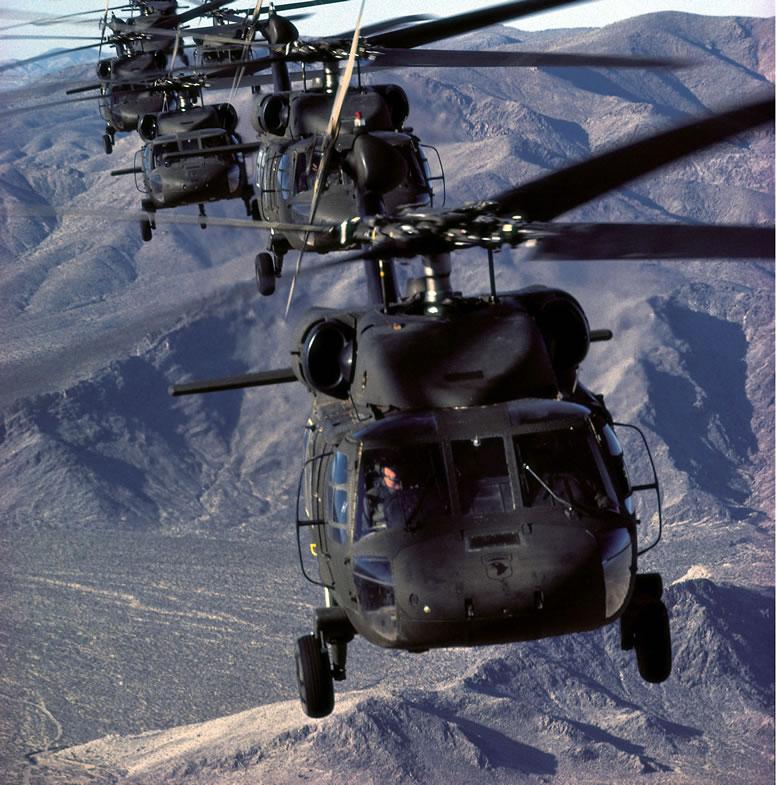
Bill Moyers interviewed Andrew J. Bacevich on his program last week. Bacevich is a West Point grad, Vietnam vet, best-selling author, and tenured professor at Boston University. He's also one of my favorite people when it comes to understanding American foreign policy (Incidentally he is also a conservative Catholic. Not counting the seemingly endless accounts of pedophilic priests, Catholics are really turning out some good people these days:) I've included a clip from the interview. Click here for the entire transcript.
BILL MOYERS: What does it say to you as a soldier that our political leaders, time and again, send men and women to fight for, on behalf of corrupt guys like Karzai?
ANDREW BACEVICH: Well, we don't learn from history. And there is this persistent, and I think almost inexplicable belief that the use of military force in some godforsaken country on the far side of the planet will not only yield some kind of purposeful result, but by extension, will produce significant benefits for the United States. I mean, one of the obvious things about the Afghanistan war that is so striking and yet so frequently overlooked is that we're now in the ninth year of this war.
It is the longest war in American history. And it is a war for which there is no end in sight. And to my mind, it is a war that is utterly devoid of strategic purpose. And the fact that that gets so little attention from our political leaders, from the press or from our fellow citizens, I think is simply appalling, especially when you consider the amount of money we're spending over there and the lives that are being lost whether American or Afghan.
BILL MOYERS: But President Obama says, our purpose is to prevent the Taliban from creating another rogue state from which the jihadists can attack the United States, as happened on 9/11. Isn't that a strategic purpose?
ANDREW BACEVICH: I mean, if we could wave a magic wand tomorrow and achieve in Afghanistan all the purposes that General McChrystal would like us to achieve, would the Jihadist threat be substantially reduced as a consequence? And does anybody think that somehow, Jihadism is centered or headquartered in Afghanistan? When you think about it for three seconds, you say, "Well, of course, it's not. It is a transnational movement."
BILL MOYERS: They can come from Yemen. They can come from—
ANDREW BACEVICH: They can come from Brooklyn. So the notion that somehow, because the 9/11 attacks were concocted in this place, as indeed they were, the notion that therefore, the transformation of Afghanistan will provide some guarantee that there won't be another 9/11 is patently absurd. Quite frankly, the notion that we can prevent another 9/11 by invading and occupying and transforming countries is absurd.
BILL MOYERS: In this context, then, what do we do about what is a real threat, from people who want to kill us, the Jihadists. What do we do about that?
ANDREW BACEVICH: First of all, we need to assess the threat realistically. Osama bin Laden is not Adolf Hitler. Al-Qaeda is not Nazi Germany. Al-Qaeda poses a threat. It does not pose an existential threat. We should view Al-Qaeda as the equivalent of an international criminal conspiracy. Sort of a mafia that in some way or another draws its energy or legitimacy from a distorted understanding of a particular religious tradition.
And as with any other international criminal conspiracy, the proper response is a police effort. I mean, a ruthless, sustained, international police effort to identify the thugs, root out the networks and destroy it. Something that would take a long period of time and would no more succeed fully in eliminating the threat than the NYPD is able to fully eliminate criminality in New York City.
BILL MOYERS: You participated this week in a symposium at the Army War College in Carlisle, Pennsylvania, on the subject, "How will we know when a war ends?" So, the boots are on the ground there. The troops are there, committed, at least through 2011. What do we do?
ANDREW BACEVICH: Well, I have to say, and I mean, I'm sure this sounds too simplistic. It would be way too simplistic for people in Washington. But if you want to get out of a war, you get out of a war. I mean, you call General McChrystal and say, "Your mission has changed. And your mission is to organize an orderly extrication of US forces."
Tuesday, April 6, 2010
Robert P. George: "Thank God for the Latter-day Saints"

April 4, 2010
At Easter mass today, our wonderful chaplain, Fr. Thomas Mullelly of Princeton's Aquinas Institute, invited us to take a few minutes to reflect on, and thank God for, the good things He has sent our way. Among the very first things I found myself praying in gratitude for is the friendship of many members of the Church of Jesus Christ of Latter-day Saints. Over the past five or six years, I have been blessed to work alongside several outstanding LDS intellectuals and to get to know a number of the Church's general authorities. They are among the most gifted, dedicated, and inspiring people I've ever known. Their faith is much misunderstood and, alas, there is still a great deal of anti-Mormon prejudice out there. But they bear no resentment or ill will towards those who misunderstand or dishonor them, and they are among the first to enter the field and the last to leave it when it comes to working for justice and the common good.
I initially came to know Latter-day Saints in the marriage movement, some years before same-sex unions and the question of redefining marriage to eliminate the principle of the sexual complementarity of spouses was an issue. They joined Catholics, Evangelicals, Eastern Orthodox Christians, observant Jews and a fair number of secular folks in the effort to do something about family fragmentation, out-of-wedlock child-bearing, and the growing divorce culture. I've also worked alongside Latter-day Saints in the pro-life cause. Every group has its bad apples, and I'm sure the LDS is no exception. But anyone who knows a large number of Mormons will, I'm sure, be struck as I have been by how many members of the Church really do lead faithful and honorable lives---lives of selfless service to others. As a community, the selflessness, generosity, and public-spiritedness of the Latter-day Saints is extraordinary.
A few weeks ago, Cardinal Francis George of Chicago spoke at Brigham Young University. In the course of his remarks, he noted that:
In recent years, Catholics and members of the Church of Jesus Christ of Latter-day Saints have stood more frequently side-by-side in the public square to defend human life and dignity. In addition to working together to alleviate poverty here and abroad, we have been together in combating the degredations associated with the pornography industry; in promoting respect for the right to life of those who are still waiting to be born in their mother's womb; and in defending marriage as the union of ome man and one woman for the sake of family against various efforts to redefine in civil law that foundational element of God's natural plan for creation. I am personally grateful that, after 180 years of living mostly apart from one another, Catholics and Latter-day Saints have begun to see one another as trustworthy partners in the defense of shared moral principles and in the promotion of the common good of our beloved country.
On this Easter Sunday, I would certainly say "amen" to that. The Catholic Church and the Church of Jesus Christ of Latter-day Saints truly share some profound understandings and commitments, especially when it comes to the sanctity of human life and the value and meaning of marriage. 180 years of living "mostly apart" is enough. Catholic and LDS scholars and leaders have a great deal to collaborate on and learn from each other. I know that many LDS law professors, philosophers, political scientists, sociologists, and historians are eager to talk with their Catholic counterparts about natural law and natural rights and more generally about the Catholic tradition of thought and debate concerning morality, politics, and law. These are conversations very much worth having.
I give thanks to God for my LDS friends and for the inspiring and courageous witness of the LDS community.
Monday, March 29, 2010
De Tocqueville Quotes

Here is De Tocqueville commenting on marriage in America and contrasting it to the situation in Europe at the time (1835-ish; bold added):
"America is certainly the country where the bonds of marriage are most respected and where the concept of conjugal bliss has its highest and truest expression. In Europe almost all social disorder stems from disturbances at home and not far removed from the marriage bed. There men come to feel scorn for natural ties and legitimate pleasures; there they develop a liking for disorder, a restless spirit, and fluctuating desires. Shaken by the tempestuous emotions which often trouble his own home, the European finds it difficult to submit to the authority of the state's legislators. When the American returns from the turmoil of politics to the bosom of his family, he immediately finds a perfect picture of orderliness and peace. There, all his pleasures are simple and natural, his joys innocent and quiet; and since he reaches happiness through the regularity of his life, he has no difficulty in regulating his opinions as well as his tastes. Whereas the European seeks to escape from his domestic troubles by disturbing society, the American draws the love of order from his home which he then carries over into his affairs of state."
Here is a great passage from De Tocqueville regarding the importance of religion to American Democracy:
In the United States, religion governs not only behavior but extends its influence to men's minds. Among Anglo-Americans there are some who profess Christian dogmas out of belief, others because they are afraid they might appear to lack belief. So Christianity reigns without obstacles by universal consent; so, as I have already said elsewhere, the result is that in the world of morality everything is definite and settled, although the world of politics is given over to debate and human experiment. Thus, the mind of man never beholds an unlimited field in front of itself; however bold he might be, man senses from time to time that he must halt before insurmountable barriers and test his most audacious ideas against certain formalities, which either hold him back or stop him altogether. The imagination of Americans, even in its greatest flights of fancy, is circumspect and cautions. Its impulses are restricted and its achievements unfinished. These habits of restraint are found in political society and to an unusual degree favor the tranquility of the people and the stability of the institutions they have adopted. Nature and circumstance have turned the inhabitant of the United States into a bold man; this is easily proved by the manner in which he seeks his fortune. If the mind of the Americans were free of all shackles, one would soon encounter among them the boldest innovators and the most relentless logicians in the world. But American revolutionaries are forced publicly to profess a certain respect for Christian morality and equity, which does not allow them easily to violate their plans; and were they to manage to rise above their scruples themselves, they would still feel hindered by those of their supporters. Up until now, no one in the United States has dared to promote the maxim that everything is legitimized in the interests of society, an impious maxim which seems to have been invented in an age of liberty simply to justify every future tyrant. Thus, while the law allows the American people to do everything, religion prevents their imagining everything and forbids them from daring to do everything. Religion, which never interferes directly in the government of Americans, should therefore be regarded as the first of their political institutions, for, if it does not give them the taste for liberty, it enables them to take unusual advantage of it.That last section in bold is, I think, the key to liberty. It's message may help us understand more clearly why our freedoms are under attack at the present. Compare this message to a talk given by Elder D. Todd Christofferson (LDS Apostle) in October 2009: link to talk here.
Wednesday, March 24, 2010
On China: Paul Krugman vs. Peter Schiff

Paul Krugman, NY Times, "Taking On China":
Tensions are rising over Chinese economic policy, and rightly so: China’s policy of keeping its currency, the renminbi, undervalued has become a significant drag on global economic recovery. Something must be done.Peter Schiff, EuroPacific Capital, "Paul Krugman Versus Reality":
To give you a sense of the problem: Widespread complaints that China was manipulating its currency — selling renminbi and buying foreign currencies, so as to keep the renminbi weak and China’s exports artificially competitive — began around 2003. At that point China was adding about $10 billion a month to its reserves, and in 2003 it ran an overall surplus on its current account — a broad measure of the trade balance — of $46 billion.
Today, China is adding more than $30 billion a month to its $2.4 trillion hoard of reserves. The International Monetary Fund expects China to have a 2010 current surplus of more than $450 billion — 10 times the 2003 figure. This is the most distortionary exchange rate policy any major nation has ever followed.
And it’s a policy that seriously damages the rest of the world. Most of the world’s large economies are stuck in a liquidity trap — deeply depressed, but unable to generate a recovery by cutting interest rates because the relevant rates are already near zero. China, by engineering an unwarranted trade surplus, is in effect imposing an anti-stimulus on these economies, which they can’t offset.
So how should we respond? First of all, the U.S. Treasury Department must stop fudging and obfuscating.
Twice a year, by law, Treasury must issue a report identifying nations that “manipulate the rate of exchange between their currency and the United States dollar for purposes of preventing effective balance of payments adjustments or gaining unfair competitive advantage in international trade.” The law’s intent is clear: the report should be a factual determination, not a policy statement. In practice, however, Treasury has been both unwilling to take action on the renminbi and unwilling to do what the law requires, namely explain to Congress why it isn’t taking action. Instead, it has spent the past six or seven years pretending not to see the obvious.
Will the next report, due April 15, continue this tradition? Stay tuned.
If Treasury does find Chinese currency manipulation, then what? Here, we have to get past a common misunderstanding: the view that the Chinese have us over a barrel, because we don’t dare provoke China into dumping its dollar assets.
What you have to ask is, What would happen if China tried to sell a large share of its U.S. assets? Would interest rates soar? Short-term U.S. interest rates wouldn’t change: they’re being kept near zero by the Fed, which won’t raise rates until the unemployment rate comes down. Long-term rates might rise slightly, but they’re mainly determined by market expectations of future short-term rates. Also, the Fed could offset any interest-rate impact of a Chinese pullback by expanding its own purchases of long-term bonds.
It’s true that if China dumped its U.S. assets the value of the dollar would fall against other major currencies, such as the euro. But that would be a good thing for the United States, since it would make our goods more competitive and reduce our trade deficit. On the other hand, it would be a bad thing for China, which would suffer large losses on its dollar holdings. In short, right now America has China over a barrel, not the other way around.
So we have no reason to fear China. But what should we do?
Some still argue that we must reason gently with China, not confront it. But we’ve been reasoning with China for years, as its surplus ballooned, and gotten nowhere: on Sunday Wen Jiabao, the Chinese prime minister, declared — absurdly — that his nation’s currency is not undervalued. (The Peterson Institute for International Economics estimates that the renminbi is undervalued by between 20 and 40 percent.) And Mr. Wen accused other nations of doing what China actually does, seeking to weaken their currencies “just for the purposes of increasing their own exports.”
But if sweet reason won’t work, what’s the alternative? In 1971 the United States dealt with a similar but much less severe problem of foreign undervaluation by imposing a temporary 10 percent surcharge on imports, which was removed a few months later after Germany, Japan and other nations raised the dollar value of their currencies. At this point, it’s hard to see China changing its policies unless faced with the threat of similar action — except that this time the surcharge would have to be much larger, say 25 percent.
I don’t propose this turn to policy hardball lightly. But Chinese currency policy is adding materially to the world’s economic problems at a time when those problems are already very severe. It’s time to take a stand.

In his latest weekly New York Times column, Nobel Prize-winning economist Paul Krugman put forward arguments that were so nonsensical that the award committee should ask for its medal back.
Recent rhetoric from Washington has put the economic relationship between the U.S. and China squarely on the front burner, and Krugman is demanding that we crank up the flame. This week 130 members of Congress sent a letter to Treasury Secretary Timothy Geithner demanding that the Obama administration designate China as a "currency manipulator". Following that, a bipartisan group of senators introduced a bill that looks to force the Obama administration's hand. For its own part, Beijing invites criticism by continuing to deny its utterly obvious currency agenda.
As these tensions escalate, most economists urge Washington to tread lightly because of the negative fallout for America if China were to begin selling its enormous cache of U.S. Treasury bonds. Krugman pushes back, asserting that the U.S. risks little by playing hardball, and that China has more to lose. He asserts that a Chinese decision to end its purchases of U.S. Treasury debt would make only a marginal impact on long-term interest rates. Did you hear that Stockholm?
According to Krugman, our secret weapon of economic invincibility is the Fed's ability to print dollars endlessly. If China were to foolishly decide to attack us by selling our debt, the Fed could simply step in and buy the excess with newly printed greenbacks. (In other words, Krugman sees no difference between funding the debt and monetizing it. See my latest video blog on the subject.). For Krugman, China would gain little from such an attack, but would lose the ability to export to its best customer and suffer severe losses in the value of its dollar holdings. Krugman's worldview is reassuring - but it has absolutely nothing to do with reality.
There is a huge difference between selling your debt to another and "selling" it to yourself. When China buys our debt, it uses its own savings. In order to purchase a trillion dollars of U.S. Treasuries, the Fed would have to expand our money supply by a corresponding amount. Even Krugman acknowledges that this would cause the dollar to lose value; however, he feels that a weaker dollar is good for America and bad for China.
Krugman does not believe that a tanking dollar will translate into higher interest rates or higher consumer prices at home. No matter how many dollars the Fed creates, or how much value those dollars lose relative to other currencies, he is confident that as long as unemployment remains high, rates will stay low and inflation will remain under control. This is absurd.
If the dollar were to nosedive, the Fed would normally look to protect the currency by raising interest rates, thereby increasing foreign demand for the currency. But with an economy currently on crutches, the Fed will ignore a weakening dollar and continue to try to boost employment with near-zero rates.
But keeping the Fed Funds rate low only holds rates down for U.S. government debt. If the dollar weakens substantially, other rates offered to other borrowers will rise as investors demand greater returns to compensate for inflation. To keep rates low for homeowners, credit card borrowers, corporations, municipalities, and state governments, the Fed would be forced to buy, or guarantee, all forms of dollar-denominated debt. The Fed would become the lender of only resort.
Once the Fed shows that its commitment to low rates is limitless (the value of the dollar be damned), private creditors will quit the game. Even average Americans would hit the Fed's bid. It would be a race for the exits, with no one wanting to be left holding a bag of worthless paper dollars.
Most economists, Krugman included, see cheap money as a panacea for all ills. And while it's true that a falling dollar, by lowering the real value of U.S. wages, would help make U.S. goods more competitive, it would also lead to skyrocketing consumer prices, rapidly rising interest rates, and a collapse in American living standards. Make no mistake: this is the end game of Krugman's "get tough on China" policy.
This apocalyptic scenario can only be avoided if Washington jealously guards the status quo, avoiding confrontation with China at all costs. Yet, even that is an outcome that no one can rationally expect. Given exploding U.S. government deficits and the inability of U.S. citizens and corporations to repair their balance sheets, the United States faces financing needs that even China's gargantuan savings stockpile will be unable to cover.
Krugman is right about one thing - China's currency peg is destabilizing the global economy and must end. But he fails utterly to understand the implications for the U.S. and China. If China were to reverse its role in the U.S. Treasury market, both economies would be destabilized in the short-term. But in the medium- and long-term, China would clearly emerge as the winner.
Absent Treasury-bond purchases, the value of the Chinese currency would rise sharply, causing goods prices to tumble in China. This long-delayed increase in purchasing power for everyday Chinese will unleash pent-up demand in what is already the largest middle class in the world. Chinese factories would retool in order to produce goods for their own citizens to consume. In RMB terms, commodity prices would plunge, making it easier for China to produce all kinds of stuff, such as automobiles, while also making it cheaper for the Chinese to buy gas. Millions will trade in bikes for cars, and Chinese oil imports will swell.
The opposite would occur in America, where an artificial, consumer-based economy, supported by Chinese lending, will come tumbling down. Without the ability to import cheap goods from overseas, Americans will pay more and get less. While gas and food become cheaper for the Chinese, they will simultaneously become much more expensive for Americans - so too will automobiles, consumer electronics, furniture, and just about every other product we want or need (even those few we still make ourselves).
Washington's best option is to recognize that the current relationship is unsustainable and to plan, as best as possible, for a more viable future. We Americans also must be honest with ourselves and recognize that we have been living beyond our means and that our lifestyle has been largely financed by austerity in China. We must conceive of a plan that weans us from this dependence without provoking China to pull the rug out from under us before we have a firm footing. To construct a policy around Krugman's ridiculous assumption that we benefit China more than they benefit us is to invite catastrophe on an unimaginable scale.
Tuesday, March 23, 2010
E Pluribus Unum

About a year ago, BYU held a campus-wide symposium on academic freedom. The conversation often circled back to the need to accommodate the competing but legitimate claims of unity and diversity. It occurred to me as I listened to the discussion that the issue belonged within an older and larger conversation about how to reconcile the “many” and the “one” in a healthy society. The Founders wrestled with this problem as they set out to form a more perfect union. They captured this perennial challenge in a now famous Latin aphorism: e pluribus unum, “out of many, one.”
This saying expressed the Founders’ aspiration to forge a new nation out of disparate colonies and a new people out of diverse cultures. E pluribus unum resonated with an America engaged in the task of nation building. It continues to resonate with Americans today because it speaks to our ongoing national project of fashioning pluralistic constituents into a cohesive commonwealth.
We used to imagine this national project through the metaphor of America as melting pot, an image that goes back at least to Letters from an American Farmer (1782) by John Hector St. John Crèvecoeur. Crèvecoeur envisioned our nation at its birth as a place where “individuals of all races are melted into a new race of man.”
Today the metaphor of America as melting pot has largely fallen out of favor. It is considered too hegemonic and implicitly violent. Nowadays we tend to reach for metaphors of assimilation that preserve and celebrate our diverse racial, ethnic, and cultural identities—gentle metaphors such as “salad bowl,” “mosaic,” “tapestry,” or “patchwork quilt.” Such metaphors, however, lack the teleology of e pluribus unum. Instead of anticipating progression from the many to the one, they anticipate the continuation of the many within the one. They celebrate diversity rather than unity. In this small matter of metaphors, we can thus discern a larger disagreement over what constitutes America’s proper national ideal: diversity or unity.
As I’ve thought about this question over the years, it has seemed to me that healthy, flourishing social institutions require a mix of both “pluribus” and “unum” as it were. People need room to express individual differences, talents, tastes, and identities. They also need a sense of common purpose, norms, values, and ideals.
This is true of nations and schools, communities and families. It is even true of the church, which consists of many members but one body: “We have many members in one body. … So we being many, are one body in Christ” (Rom 12:4-5). The very term “member” is metaphorical; it harks back to Paul’s extended analogy in 1 Corinthians 12 to the church as a single body comprising many members with a diversity of valuable gifts and necessary functions. Paul’s analogy constitutes a sort of scriptural version of e pluribus unum applied to the church.
BYU also accommodates both individual diversity and institutional unity. A few years ago, we crafted an “Enriched Environment” statement articulating our commitment to diversity and unity for the students we admit. The statement, which has been approved by the Board, reads in part:
"[T]he university seeks qualified students of various talents and backgrounds, including geographic, educational, cultural, ethnic, and racial, who relate together in such a manner that they are ‘no more strangers and foreigners, but fellow citizens with the saints, and of the household of God’ (Ephesians 2:19). It is the university’s judgment that providing educational opportunities for a mix of students who share gospel values and come from a variety of backgrounds and experiences is an important educational asset to BYU.”Notice the conjunction of diversity and unity: “various talents” but all “qualified”; divergent “backgrounds” but all comfortably gathered in the same “household”; a “mix of students” but all sharing “gospel values.”
BYU unites individuals possessing both a rich diversity of gifts and a shared commitment to the common good. We gather individuals with different talents, tastes, disciplinary expertise, interests, life experiences, creative abilities, and so forth. We cannot flourish without such individual diversity. We need experts in Management, Mathematics, Microbiology, Music, and even Milton. At the same time, BYU unites diverse individuals in a community bound together by a common commitment to our institutional mission and, for most, by an even deeper commitment to covenants that unite us as disciples in our diverse disciplines. We cannot flourish without a sense of common purpose. This admixture of unity and diversity makes life at BYU wonderfully enlivening for me. We are many and we are one.
Subscribe to:
Posts (Atom)


 Posts
Posts

